


Imagine stepping into a world where the laws of physics take a vacation and your wildest dreams come to life. Welcome to the fascinating realm of VR world building, where creativity knows no bounds and the only limit is your imagination. Whether it’s crafting a serene landscape or a chaotic cityscape filled with flying cats, VR lets creators shape experiences that are as immersive as they are entertaining.
Overview of VR World Building
VR world building enables creators to construct intricate digital environments that engage users fully. Immersion plays a crucial role in this process, as users can traverse these spaces as though they are physically present. Designers utilize advanced tools and software to bring these worlds to life, integrating elements such as 3D models, soundscapes, and interactive features.
Creating diverse landscapes remains a primary focus for many developers. Users can explore serene forests, bustling urban centers, or futuristic cities, tailored to their specific narrative or purpose. The adaptability of VR allows for tailored experiences, whether for education, entertainment, or training simulations.
Adoption of various techniques aids in the design process. Procedural generation allows for rapid creation of expansive terrains while ensuring uniqueness. Meanwhile, storytelling elements enrich the user experience, weaving narratives that make the environment feel more alive and purposeful.
Collaboration amongst teams enhances the outcome of VR projects. Developers, artists, and narrative designers work together to ensure the final product aligns with the intended vision. This teamwork often leads to innovative approaches and solutions, pushing the boundaries of what is possible in a VR setting.
Emerging technologies continue to influence VR world building. Advances in artificial intelligence enable responsive environments that adapt to user interactions, creating dynamic experiences. Additionally, enhanced graphics improve realism, further captivating the audience.
VR world building stands as a testament to creativity in digital spaces. With endless opportunities for exploration, designers are paving the way for new forms of engagement and interaction.
Key Elements of VR World Building
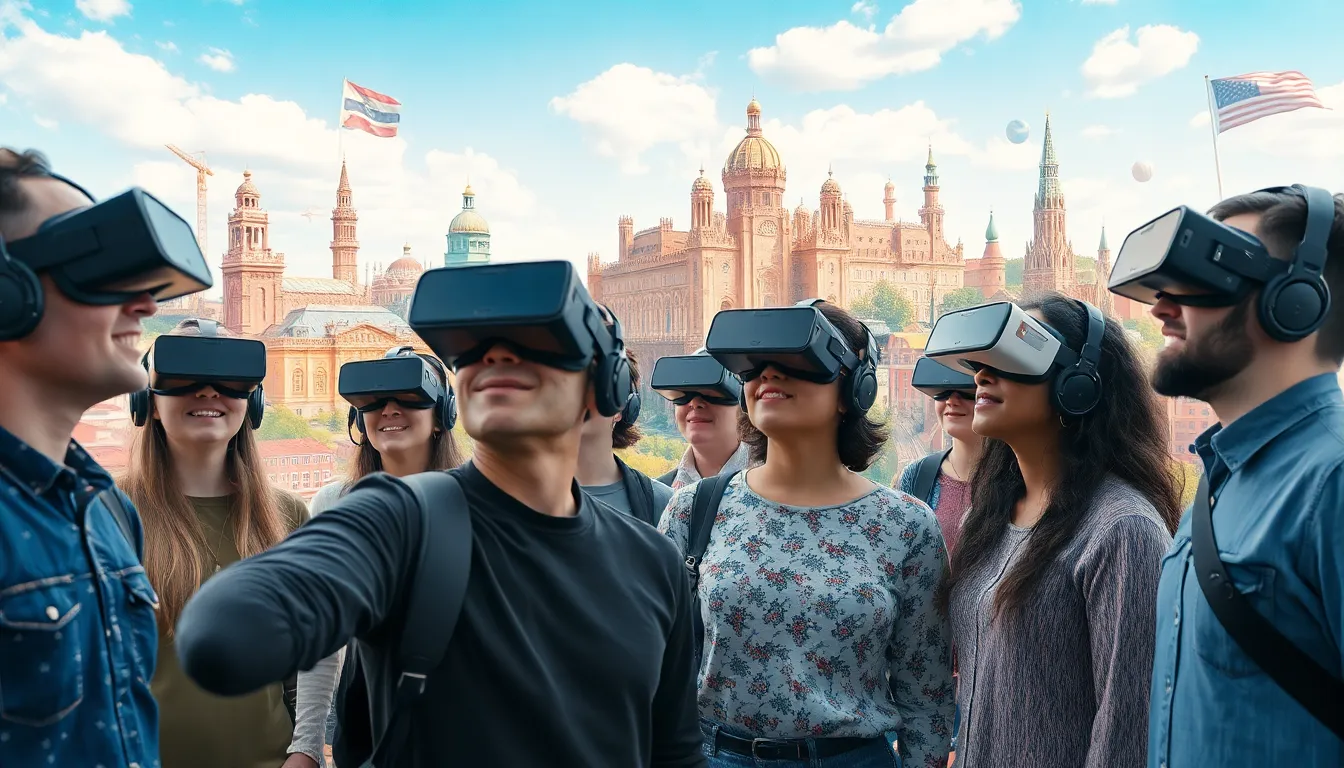
Effective VR world building involves multiple critical components that enhance user engagement and create immersive experiences. Two of the primary elements considered are spatial design and user interaction.
Spatial Design
Spatial design focuses on how environments are structured and navigated. It includes the arrangement of elements such as terrain, buildings, and landmarks, ensuring they feel cohesive. Effective spatial design enables users to explore spaces intuitively. Designers should prioritize creating varied environments, from vast open landscapes to tightly packed urban settings. Consideration for scale plays a role, as well-designed dimensions enrich immersion. Attention to lighting impacts atmosphere and mood, significantly affecting user experience. Integrating elements like pathways and landmarks creates natural navigation aids. Developers often use advanced modeling tools to sculpt these dynamic spaces, allowing for unique experiences that captivate users.
User Interaction
User interaction addresses how individuals engage with virtual environments and the systems within them. Essential to this aspect are mechanics that allow for movement, communication, and item manipulation. Engaging interaction methods enhance immersion; players may use gestures or controllers to interact with objects. Feedback mechanisms, such as visual cues or sound effects, keep users informed of their actions within the world. Developers should design challenges that require player participation, fostering deeper engagement. Customization options provide personal touches to user avatars or environments, enhancing the connection to the space. Thoughtful user interfaces contribute to a seamless experience, allowing participants to navigate without distraction or confusion.
Tools and Technologies in VR World Building
Numerous tools and technologies contribute to effective VR world building. These resources enable creators to craft engaging environments through various specialized applications and software.
VR Development Platforms
Popular VR development platforms facilitate the creation of diverse immersive experiences. Unity stands out with its robust asset store and extensive community support, making it ideal for beginners and professionals alike. Unreal Engine offers advanced graphics capabilities and a powerful visual scripting system, appealing to developers focused on realism. Both platforms support cross-platform deployment, enabling broader audience reach. Additionally, there are niche tools like A-Frame, which allow web developers to create VR experiences using HTML. Each platform has distinct features, benefiting different aspects of world building.
Asset Creation Software
Effective world building relies on high-quality asset creation software. Blender provides a free, open-source option for 3D modeling and animation, allowing developers to produce intricate models and textures. Autodesk Maya and 3ds Max offer professional-grade tools for character rigging and animation, appealing to serious developers. Additionally, ZBrush specializes in sculpting detailed organic forms, which enhances character and environmental design. Meanwhile, software like Substance Painter ensures textures are vibrant and relevant, elevating the overall visual appeal of a virtual environment. The combination of these tools helps create a rich, immersive experience for users.
Applications of VR World Building
Virtual reality world building finds diverse applications that extend across various domains, including entertainment, education, and training. These applications capitalize on the ability to craft immersive experiences tailored to user needs.
Entertainment and Gaming
Entertainment and gaming sectors leverage VR world building for unparalleled experiences. Developers create intricate game environments that allow users to dive deep into fantastical worlds. Users explore expansive landscapes that can change with their choices, enhancing engagement. Collaborations between artists, developers, and storytellers lead to rich narratives that draw players into immersive adventures. Experiences range from realistic simulations of sports events to fantastical quests in imaginary realms, showcasing the versatility of VR. As players interact with environments, they encounter dynamic challenges and rewards, making each journey unique.
Education and Training
VR world building serves educational and training purposes by offering immersive learning experiences. Institutions design virtual classrooms where students can engage interactively with subjects. Simulations replicate real-world scenarios, giving trainees valuable hands-on experience without real-world risks. Educators customize environments to match curriculum goals, enhancing student engagement. The adaptability of VR allows for learning in virtually any subject, from science to history, with interactive elements that deepen understanding. Assessments can occur in engaging formats, providing instant feedback for improvement. Overall, VR transforms conventional education into an interactive adventure.
Challenges in VR World Building
Creating immersive virtual worlds involves navigating various challenges that can hinder the development process. These challenges range from technical limitations to user experience considerations.
Technical Limitations
Technical constraints often restrict the fidelity and interactivity of VR environments. Hardware capabilities like processing power and graphics performance directly affect how rich a virtual experience can be. Limited frame rates or latency issues can disrupt immersion, causing discomfort for users. Software tools also face challenges related to compatibility and usability. Developers must adapt their designs to fit within existing platforms, which can restrict creative freedom. Integrating complex algorithms for artificial intelligence or procedural generation may pose additional hurdles, making it harder to achieve desired outcomes in expansive worlds.
User Experience Considerations
User experience plays a critical role in successful VR world building. Navigating virtual spaces must feel intuitive, with seamless movement and interaction mechanics. Users may struggle if environments lack clear landmarks or cues for orientation. Interaction methods should provide immediate feedback to maintain engagement. Additionally, designers must consider accessibility, ensuring that virtual experiences cater to diverse audiences. Poorly designed interfaces can lead to frustration, detracting from the overall immersive experience. Prioritizing these elements enhances user satisfaction and encourages deeper exploration of the virtual worlds created.
The evolution of VR world building marks a significant shift in how creators approach digital environments. With endless possibilities for innovation and engagement, designers are empowered to craft experiences that captivate users on multiple levels. As technology advances, the tools available for VR development become more sophisticated, enabling richer interactions and more immersive storytelling.
Collaboration among diverse teams continues to drive the industry forward, fostering creativity and pushing boundaries. By addressing challenges like technical limitations and user experience, creators can enhance the overall effectiveness of their virtual worlds. The future of VR world building promises even more exciting developments, inviting both creators and users to explore uncharted territories in virtual reality.


