


Imagine stepping into a world where the impossible becomes possible, where you can slay dragons before breakfast or fly through the cosmos without ever leaving your couch. Welcome to the realm of VR simulations, where reality takes a backseat and imagination takes the wheel. These immersive experiences are not just for gamers anymore; they’re revolutionizing industries from education to healthcare, making learning and training as thrilling as a rollercoaster ride.
In a landscape where boredom is the enemy, VR simulations offer a lifeline. They engage users in ways traditional methods can’t, transforming mundane tasks into exciting adventures. So whether you’re a curious learner or a seasoned pro, it’s time to strap on that VR headset and dive into a universe of endless possibilities. Get ready to experience life like never before—after all, who wouldn’t want to be a superhero for a day?
Overview of VR Simulations
VR simulations offer immersive experiences that recreate real-world or fictitious environments. This technology engages users in a way traditional media cannot. Various industries leverage VR simulations for training, design, and entertainment. For example, healthcare professionals use simulations to practice surgical procedures in a risk-free setting.
Education benefits from VR simulations by providing interactive learning environments. Students explore historical events or scientific concepts through engaging virtual scenarios. These simulations enhance retention and understanding, making lessons memorable. Similarly, the architecture field utilizes VR to visualize designs before construction begins. Clients experience a realistic walkthrough of projects, allowing for better feedback.
In the gaming sector, VR simulations deliver unparalleled realism and interactivity. Players engage with environments and characters, heightening their gaming experience. Innovations in virtual reality hardware, such as headsets and motion controllers, further enhance these experiences, creating a more immersive scenario.
Military training programs apply VR simulations to prepare personnel for combat situations without real-world dangers. Soldiers practice tactics in varied environments, improving their response and decision-making skills. Additionally, the corporate world employs VR for team-building exercises. Employees collaborate in virtual spaces, strengthening communication and teamwork.
As technology advances, the potential applications of VR simulations expand. Companies continuously explore new possibilities for enhancing engagement and learning efficacy. VR simulations provide unique opportunities to experience different perspectives and scenarios in a controlled, safe manner. Their adaptability makes them an invaluable tool across multiple sectors.
Applications of VR Simulations
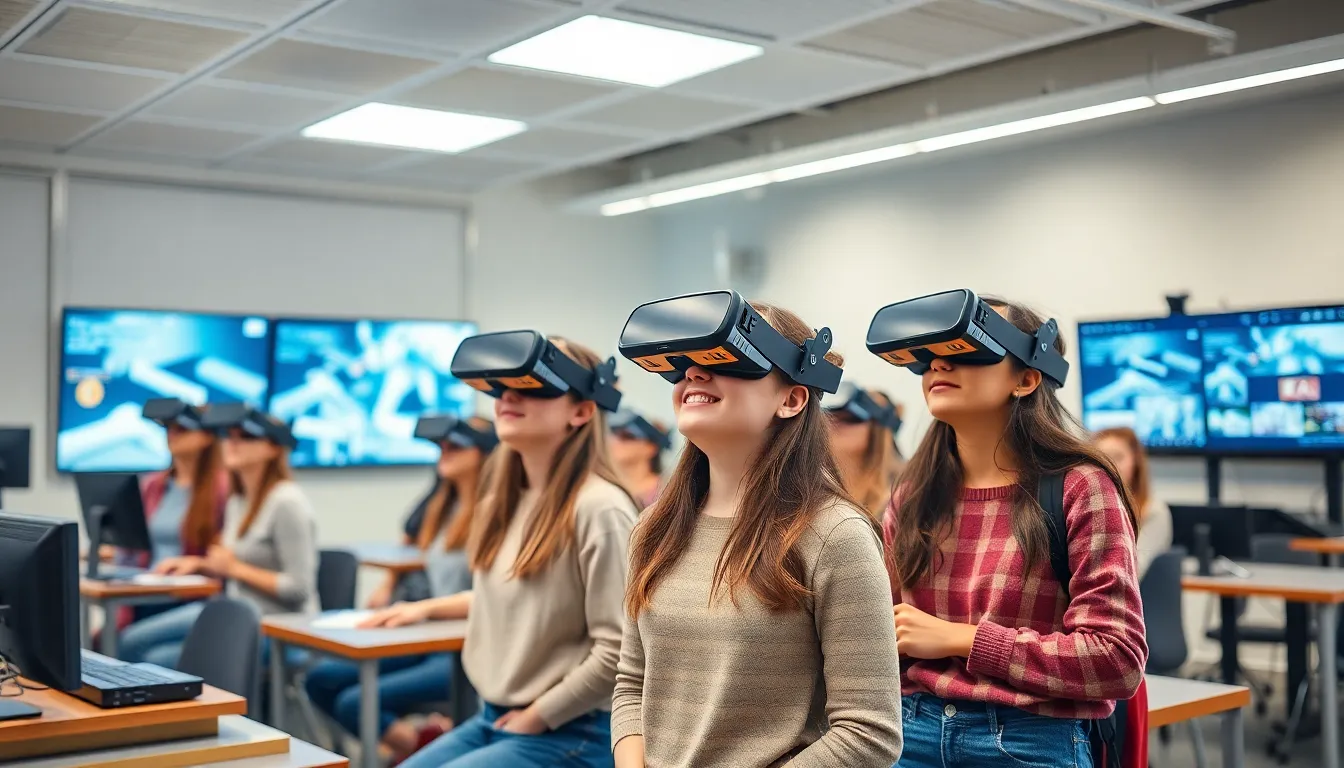
VR simulations offer a wide range of applications across various fields, enhancing how individuals learn, practice, and engage.
Education and Training
Education benefits significantly from VR simulations. Students can immerse themselves in interactive environments, making complex concepts easier to grasp. Classrooms become virtual spaces where learners can participate in historical events or explore scientific phenomena firsthand. This engaging method fosters better retention of information compared to traditional teaching methods. Training programs across sectors utilize VR to enhance skill development. Employees practice job-related tasks in safe settings, minimizing the risks associated with real-world scenarios. For instance, trainees in aviation can undergo flight simulations, allowing them to experience various situations without leaving the ground.
Healthcare
Healthcare utilizes VR simulations to improve medical training and patient care. Surgeons practice intricate procedures in a controlled environment, gaining confidence before performing actual surgeries. This hands-on approach results in better preparation and reduced error rates in the operating room. Patients can engage with VR for therapeutic purposes, using guided imagery to manage anxiety or pain during medical procedures. Medical students benefit from immersive simulations, enabling them to understand anatomy and physiology in a more tangible way. VR also aids in telemedicine, allowing remote consultations where doctors can visually assess patients in lifelike settings.
Entertainment and Gaming
The entertainment and gaming industries have embraced VR simulations to create captivating experiences. Gamers step into virtual worlds, experiencing heightened levels of realism and interactivity. This technology turns gameplay into an adventure, allowing users to engage with characters and environments like never before. Developers innovate continuously, enhancing graphics and mechanics to create more immersive scenarios. Live events, such as concerts or sports, utilize VR to transport attendees into the action, providing a shared experience from the comfort of their homes. This evolution signifies a shift in how individuals consume entertainment, catering to diverse audiences simultaneously.
Benefits of VR Simulations
VR simulations provide numerous benefits across various fields. They create immersive environments that enhance learning and skill development, making them key tools in today’s technology-driven world.
Enhanced Learning Experience
Students experience enhanced learning through VR simulations. Educational content becomes interactive, resulting in deeper engagement with complex subjects. Research shows that learners retain information better when immersed in realistic scenarios. For example, history students can walk through ancient civilizations and experience events firsthand, which reinforces understanding. Interactive simulations allow users to visualize scientific concepts, making abstract ideas more tangible. Learning through this medium encourages collaboration, as students often engage in group activities, sharing insights and learning together. As a result, classrooms transform into dynamic learning environments that inspire curiosity and creativity.
Improved Skill Development
Skill development improves significantly with VR simulations. Trainees can practice in a safe, controlled setting, which fosters confidence before applying skills in real life. For instance, medical professionals use VR to rehearse complex surgical procedures, reducing errors in actual operations. Aviation training programs utilize simulations that replicate flight scenarios, allowing pilots to respond to emergencies without any risk. In corporate environments, employees engage in VR simulations for teamwork exercises, enhancing communication and problem-solving abilities. These practical experiences lead to better retention and proficiency, empowering individuals to excel in their respective fields.
Challenges in VR Simulations
VR simulations face numerous challenges that can affect their effectiveness and adoption across different sectors. Addressing these challenges is crucial for maximizing the potential of VR technology.
Technical Limitations
Technical limitations pose significant hurdles for VR simulations. Resolution and latency issues can hinder user experience, as low-quality visuals lead to discomfort and motion sickness. Device compatibility also remains a challenge, with varying hardware specifications impacting performance. Another concern relates to the need for high processing power, which may restrict accessibility for all users. Limited content availability further complicates matters, as not all industry-specific applications are developed, slowing widespread adoption.
User Adaptation
User adaptation represents another key challenge in VR simulations. Familiarizing users with VR interfaces can require extensive training, leading to potential usability issues. Some individuals experience discomfort with immersive environments, negatively affecting their engagement levels. Moreover, a lack of intuitive designs may discourage less tech-savvy users from fully utilizing VR. Gradually increasing the complexity of scenarios can help users adapt, but this process takes time and patience from both instructors and learners.
Future Trends in VR Simulations
Emerging trends in VR simulations point toward a dynamic future across various sectors. As technology advances, new possibilities are quickly taking shape.
Advancements in Technology
Innovative hardware developments drive VR experiences to new heights. Higher resolutions and improved processing capabilities enhance realism and user immersion. Haptic feedback systems allow users to physically interact within virtual environments. Alongside improvements in graphics, artificial intelligence integration offers personalized experiences tailored to individual users. Additionally, cloud computing enables seamless updates and remote access to applications, reducing the need for complex local installations. Virtual reality systems harness these breakthroughs, making simulations more engaging and lifelike.
Increasing Accessibility
Increasingly, VR platforms are designed for broader user engagement. Developers focus on reducing costs, making VR devices more affordable for consumers and businesses. Cloud-enabled services eliminate high processing requirements for local setups, allowing access from less powerful devices. Efforts to create user-friendly interfaces simplify the onboarding process, making VR appealing to diverse audiences. Moreover, developing cross-platform compatibility ensures that users can connect regardless of device. Accessibility initiatives, therefore, foster wider adoption across industries and educational institutions, democratizing VR’s benefits and potential applications.
VR simulations are reshaping how individuals engage with information and experiences. As technology evolves the potential for immersive learning and training grows exponentially. By bridging the gap between theory and practice VR allows users to explore complex scenarios safely and effectively.
The versatility of VR across various sectors from education to healthcare highlights its transformative power. As accessibility improves and content expands the future of VR looks promising. Embracing this technology can lead to enhanced understanding and unforgettable experiences. The journey into the world of virtual reality is just beginning and its impact will only continue to deepen.


