


Imagine slipping on a headset and finding yourself in a world where gravity’s just a suggestion and dragons are your new best friends. Virtual reality isn’t just for gamers anymore; it’s transforming how we experience everything from education to therapy. With technology evolving faster than a toddler on a sugar rush, VR is opening doors to experiences that were once confined to the realms of science fiction.
In this brave new world, the line between reality and imagination blurs, making it possible to explore ancient ruins, practice surgery, or even face your fears—all without leaving your living room. So buckle up and get ready to dive into the wild and wacky universe of virtual reality, where the only limit is your imagination (and maybe your Wi-Fi connection).
Overview of Virtual Reality
Virtual reality represents a revolutionary technology that immerses users in simulated environments. Users can interact with these environments through specialized hardware, such as VR headsets and gloves. Numerous applications exist beyond gaming, including education, therapy, and training simulations.
In education, VR facilitates engaging learning experiences. Students can explore historical landmarks, conduct scientific experiments, and visualize complex concepts in 3D. This approach enhances knowledge retention and fosters a deeper understanding of subjects.
Therapeutic applications utilize VR to treat various mental health issues. For instance, exposure therapy allows patients to confront phobias in a controlled setting, while virtual environments help those with PTSD safely navigate traumatic scenarios. These innovative techniques improve coping strategies and accelerate recovery.
Training programs leverage VR to simulate real-world situations in fields like medicine and aviation. Medical professionals practice surgical procedures using realistic VR models, ensuring skills development without risking patient safety. Likewise, pilots gain invaluable experience in flight simulations that mimic emergency scenarios.
Entertainment experiences have evolved through VR technology. Users can attend concerts, visit art galleries, or travel to exotic locations without leaving their homes. These experiences provide sensory engagement, igniting creativity and expanding cultural horizons.
As VR technology advances, possibilities continue to grow. The integration of artificial intelligence and enhanced sensory feedback will further enrich interactions within virtual spaces. This evolution transforms how individuals connect with digital content and with one another, making the experience more immersive and rewarding.
History of Virtual Reality
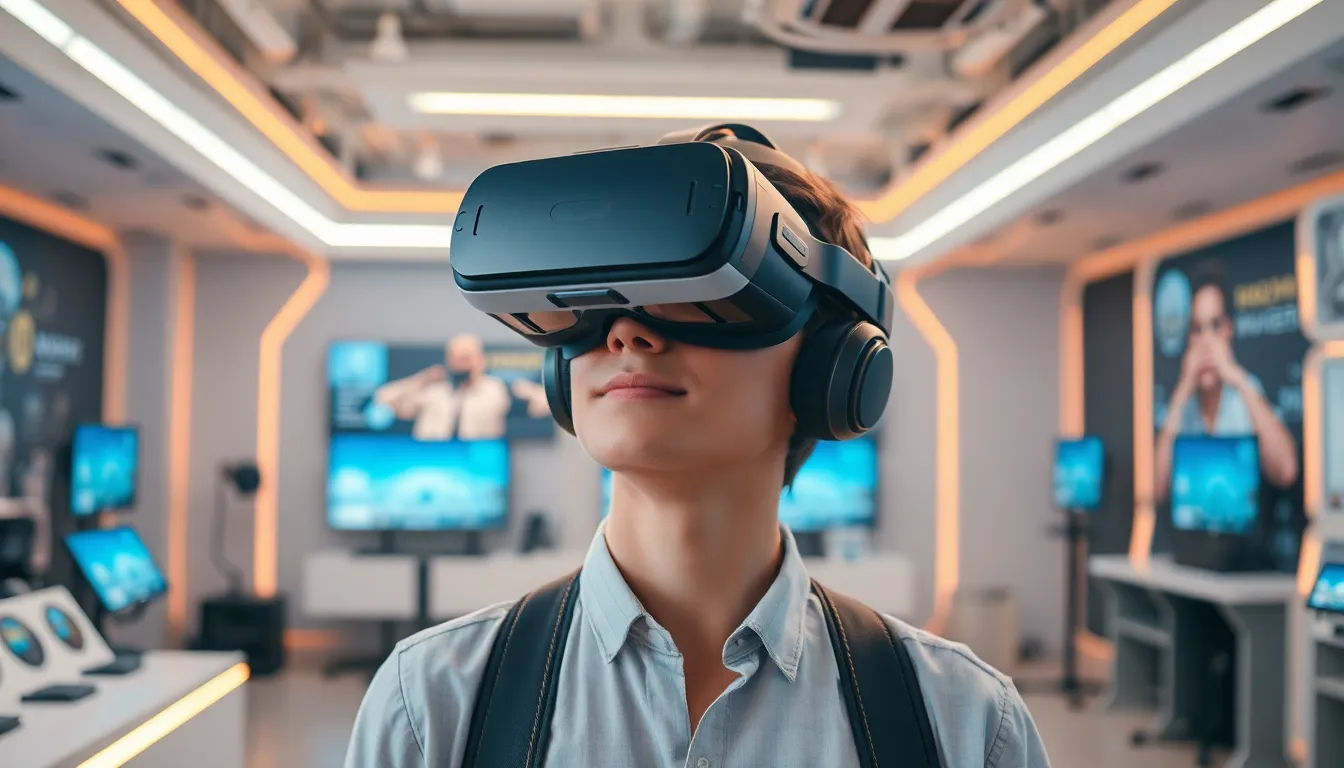
Virtual reality’s history traces back several decades, showcasing significant milestones that shaped the technology’s evolution.
Early Innovations
Research in the 1960s laid the groundwork for VR with devices like the Sensorama, which simulated multi-sensory experiences. Shortly after, the Aspen Movie Map emerged, offering interactive tours of Aspen, Colorado. In 1984, Jaron Lanier founded VPL Research, producing the first commercial VR products like DataGlove and EyePhone. These innovations inspired further exploration into virtual interfaces and immersive experiences. Devices from this early era, while rudimentary compared to today’s standards, set the stage for future advancements in virtual environments.
Modern Developments
Recent years have witnessed a surge in VR technology due to advancements in computing power and graphics. High-quality VR headsets such as the Oculus Rift, HTC Vive, and PlayStation VR gained popularity, making immersive experiences accessible to consumers. Major industries now utilize VR for training and education, allowing users to engage in realistic simulations. The collaboration between hardware manufacturers, software developers, and content creators has accelerated innovation. Today, VR applications extend to sectors like healthcare, showcasing its potential in surgical training and therapy sessions. As the technology continues to mature, integrating artificial intelligence and enhanced sensory elements further enriches the user’s experience.
Applications of Virtual Reality
Virtual reality boasts a wealth of applications across diverse sectors. Its influence reaches beyond entertainment to education, healthcare, and training.
Gaming and Entertainment
Enhanced gaming experiences stand out as one of the primary applications of VR. Players immerse themselves in 360-degree worlds, transforming traditional gameplay. Engaging in multiplayer scenarios increases social interaction and competition. This fully interactive environment creates a sense of presence that captivates users. Furthermore, VR allows fans to attend live events, including concerts and sports, from home, expanding access to thrilling experiences. As a result, both developers and consumers can explore creative possibilities and redefine entertainment.
Education and Training
Innovative educational techniques emerge with VR technology. Students experience history and science firsthand through virtual field trips and interactive simulations. This hands-on learning approach fosters deeper understanding and retention of complex concepts. For instance, medical students can practice surgical procedures in a risk-free environment. Additionally, VR enhances professional training by replicating real-world scenarios, emphasizing skill development in fields like aviation and emergency response. As educational institutions adopt VR tools, they cultivate engaging learning experiences that cater to various learning styles.
Healthcare and Therapy
Transforming healthcare practices, VR plays a vital role in treatment and training. Therapeutic uses include exposure therapy for patients with phobias or PTSD, allowing safe desensitization to fears. Controlled environments help therapists guide individuals through their experiences effectively. In surgical training, residents gain critical skills by practicing in simulations that mimic real-life procedures. Beyond training, VR facilitates patient education by visualizing medical processes. Consequently, both healthcare providers and patients benefit from enhanced communication and understanding, ultimately improving patient outcomes.
Benefits of Virtual Reality
Virtual reality offers numerous advantages across various fields. Notably, this technology revolutionizes how users interact with digital content.
Enhanced User Experience
Engagement levels rise significantly when individuals immerse themselves in virtual environments. With VR, users can participate in activities that mimic real-life experiences, like sports or travel. Enhanced sensory feedback creates authentic feelings that traditional media cannot provide. Users gain a unique platform that fosters social interactions and collaborative experiences, making games and virtual events more dynamic. Additionally, VR technology also tailors experiences to user preferences, ensuring personalization that enhances satisfaction and enjoyment.
Immersive Learning Opportunities
Education transforms through the use of virtual reality. Learners can step into historical events and scientific phenomena, allowing for deeper understanding. Experiential learning through VR enables students to visualize concepts and engage in hands-on activities without physical constraints. Medical students benefit from practicing surgical procedures in a lifelike environment, minimizing risk during training. Virtual field trips to locations worldwide create unique opportunities that traditional classrooms cannot replicate. Overall, immersive learning experiences promote better knowledge retention and inspire curiosity, making education more enjoyable and impactful.
Challenges in Virtual Reality
Virtual reality faces several challenges that could hinder its broader adoption. Technical limitations and ethical considerations stand out as key factors.
Technical Limitations
Hardware advancements often lag behind user expectations. High-quality VR experiences require powerful processors and graphics capabilities, making accessibility a concern. Limited battery life in headsets also restricts prolonged usage. Furthermore, issues like motion sickness affect user comfort, especially during extended sessions. Resolution and field of view play crucial roles in realism, yet many existing devices still fall short. As a result, developers struggle to create truly immersive environments that meet user demands. Incorporating better tracking technology remains a priority for enhanced interaction.
Ethical Considerations
Ethical considerations raise important questions about user safety and privacy. VR experiences can lead to sensory overload, causing users to lose touch with reality. Content regulation is crucial since VR can expose users to intense experiences or sensitive topics without adequate safeguards. Data collection practices for tracking movements and interactions pose privacy concerns. Without clear policies, users may feel vulnerable regarding their personal information. Inclusivity in content creation also presents a challenge, as VR should serve diverse audiences. Addressing these ethics will foster a responsible environment for developers and users alike.
Virtual reality stands at the forefront of technological innovation. Its applications extend far beyond gaming into education, therapy, and professional training. By creating immersive experiences, VR not only enhances learning but also provides therapeutic benefits that were once unimaginable.
As this technology continues to evolve, it promises to reshape how people interact with digital content and each other. While challenges remain, the potential for VR to enrich lives and transform industries is undeniable. Embracing this technology could lead to a future where the boundaries between reality and imagination blur even further.


