


Imagine slipping on a headset and suddenly finding yourself on a tropical beach or battling aliens in a futuristic city. Welcome to the world of VR technology, where the only limits are your imagination and maybe your living room furniture. This isn’t just a playground for gamers; it’s transforming how people learn, work, and even socialize.
With advancements happening faster than you can say “virtual reality,” it’s no wonder that VR is making waves across industries. From virtual classrooms to immersive training simulations, the potential is as vast as the universe itself. So, grab your headset and get ready to explore how this mind-blowing technology is reshaping our reality.
Overview Of VR Technology
Virtual reality technology immerses users in 3D virtual environments, transforming experiences in diverse fields. Users access these environments through headsets equipped with advanced sensors and displays. Industries such as healthcare utilize VR for surgical simulations, enhancing training and improving patient outcomes. Education benefits from VR as it offers interactive lessons that capture student engagement and boost retention.
Companies are increasingly adopting VR for corporate training, allowing employees to practice skills in risk-free settings. In entertainment, VR delivers engaging gaming experiences that simulate real-life scenarios. VR also revolutionizes social interactions by enabling virtual gatherings, breaking barriers posed by distance.
Market data shows significant growth in the VR sector, with a projected increase from $15 billion in 2020 to over $57 billion by 2027. Research indicates that 70% of enterprises now invest in VR solutions, reflecting confidence in its effectiveness. Tools like Oculus Quest and HTC Vive continue to lead in consumer hardware, providing accessible experiences for users.
In terms of software, platforms like VRChat and AltspaceVR enhance community interaction, allowing users to socialize in virtual spaces. Content development is expanding rapidly, with many developers creating immersive applications across various genres. In summary, VR technology reshapes numerous aspects of daily life, from training and education to entertainment and social engagement.
Key Components Of VR Technology
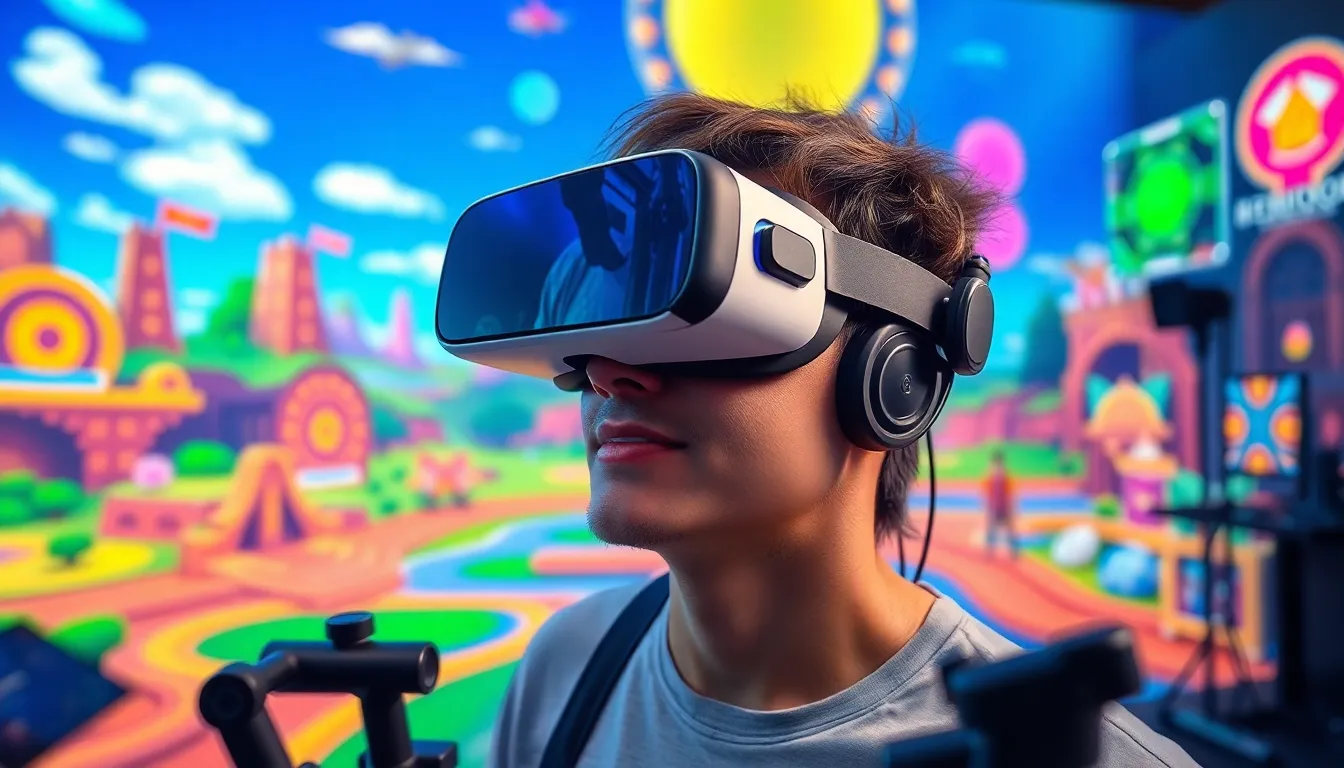
VR technology comprises critical components that create immersive experiences. Two main components include hardware and software.
Hardware
Headsets, sensors, and controllers represent the core hardware elements in VR. Headsets like Oculus Quest and HTC Vive offer high-resolution displays and built-in audio for an expansive visual field. Sensors track movements, capturing users’ positions and actions in real-time. Controllers allow interaction with virtual environments, providing tactile feedback. Additionally, some setups incorporate external sensors to enhance tracking accuracy. High-quality hardware contributes to a more seamless and engaging experience, making the VR environment feel more lifelike.
Software
Software drives the immersive experience in virtual reality. It includes VR platforms, applications, and content specifically designed for user engagement. Various applications cater to gaming, education, and training, each providing tailored experiences. Platforms like VRChat and AltspaceVR facilitate social interactions, allowing users to communicate in virtual spaces. Furthermore, development tools enable creators to design custom experiences, ensuring diverse content availability. Recent advancements in software capabilities enhance realism and interactivity, drawing users deeper into the virtual world.
Applications Of VR Technology
VR technology transforms various sectors by providing immersive experiences. Below are key applications that showcase its impact.
Gaming
Gaming remains one of the most celebrated applications of VR technology. Players engage in virtual worlds where they can explore vast landscapes and interact with characters. The immersive nature enhances gameplay, making experiences more thrilling and engaging. Various platforms, such as PlayStation VR and Oculus Quest, support an array of titles catering to different interests. Research indicates that the market for VR gaming grew from approximately $1.5 billion in 2020 to over $12 billion in 2024. Gamers now seek more interactive and realistic experiences, driving developers to design innovative software.
Education
Education increasingly utilizes VR to immerse students in interactive learning environments. Subjects ranging from history to science benefit from virtual field trips, allowing students to explore ancient civilizations or conduct virtual experiments. Users retain information better through hands-on experiences rather than traditional lectures. Platforms like Google Expeditions enable users to explore diverse environments, fostering engagement. Statistics reveal that educational VR can improve knowledge retention by up to 75%. Schools and universities are investing more in VR technology to enhance the learning experience and prepare students for real-world applications.
Healthcare
Healthcare also benefits from VR technology in training and patient care. Medical professionals use VR for detailed surgical simulations, allowing them to practice techniques without risks to patients. This method enhances skill development and increases confidence during actual procedures. Patient treatment, particularly for phobias and PTSD, often incorporates VR therapy, helping individuals confront fears in a controlled setting. Studies show that VR therapy significantly reduces anxiety levels, making it an effective solution. The healthcare industry continues to embrace VR technology, recognizing its potential to improve outcomes and training processes.
Challenges And Limitations
VR technology faces numerous challenges and limitations that impact its widespread adoption and effectiveness.
Technical Challenges
Limited processing power can hinder the performance of VR experiences. High-quality graphics require robust hardware, which may not be accessible to all users. Latency issues arise from slow response times, leading to motion sickness in some users. Inadequate battery life can restrict usage duration, affecting user engagement. Moreover, software compatibility across different platforms complicates the development process, making it challenging for creators to reach broader audiences. Robust solutions must address these technical hurdles to enhance user experience and expand VR’s applicability.
Ethical Considerations
Ethical challenges surface as VR technology becomes more prevalent. Issues related to user privacy often emerge with data collection during VR experiences. Users may inadvertently share sensitive information while engaging with immersive environments. Additionally, the potential for addiction raises concerns about excessive usage and its impact on mental health. Violence in VR gaming sparks debates about desensitization and its possible effects on behavior. Developers and industry leaders must navigate these ethical dilemmas to create safe and responsible VR experiences.
Future Trends In VR Technology
Innovations in VR technology are set to change user experiences dramatically. Enhanced resolution in headsets increases immersion, offering clearer visuals. Companies are exploring wireless capabilities, allowing users to move freely without being tethered to a device. Social VR platforms aim to create more engaging virtual communities, fostering real-time interactions among users.
Developers are investing in haptic feedback systems, enriching the sense of touch within virtual environments. This technology will enable users to feel sensations, making experiences more realistic. Additionally, artificial intelligence integration is expected to personalize user experiences, adapting content based on individual preferences and behaviors.
Market analysis highlights the anticipated growth in VR for training applications. Industries, such as healthcare and manufacturing, will utilize VR simulations for skill enhancement, leading to safer and more effective training outcomes. Educational institutions are likely to adopt VR for remote learning, providing students with immersive lessons that enhance understanding.
Research forecasts the gaming industry will experience substantial growth, projecting revenues will soar from $1.5 billion in 2020 to over $12 billion by 2024. Gaming companies are developing more interactive titles that utilize VR to create compelling narratives and games. As more users adopt VR headsets, content variety will increase, catering to diverse interests.
Concerns about accessibility are being addressed as manufacturers work toward more affordable headset options. Ensuring that VR technology is widely available will drive user adoption. Future advancements in processing power and battery life will minimize technical limitations, enhancing user experiences in both personal and professional settings.
VR technology is paving the way for transformative experiences across multiple sectors. Its ability to create immersive environments enhances learning training and social interactions. As advancements continue to emerge the potential for VR is boundless.
The growing market reflects increasing confidence in its applications. With innovations in hardware and software users can expect even more engaging experiences. Addressing challenges will be crucial for developers as they strive to create safe and effective solutions.
The future of VR looks promising with opportunities for growth in education gaming and healthcare. As the technology evolves it will undoubtedly become an integral part of everyday life enriching how people learn connect and entertain themselves.


